[SMM Analysis] The Paradox Behind the Stagnation of EU Internal Copper Scrap Trade and the Surge in Outflows

Published: Jan 2, 2026 11:58
Source: SMM
[SMM Analysis:The Paradox Behind the Stagnation of EU Internal Copper Scrap Trade and the Surge in Outflows]Market behavior is being further distorted by the anticipation of looming regulations. Starting in July 2025, the EU launched systematic customs monitoring of cross-border metal scrap movements. Stricter regulatory frameworks will take effect in May 2026, culminating in a total export ban to non-OECD countries by May 2027. This clear regulatory roadmap has triggered a "front-running" effect. To bypass future compliance costs, complex auditing processes, and the eventual ban, traders are accelerating liquidations during the current window of opportunity.

Internal Trade Shrinks Far More Severely Than Exports
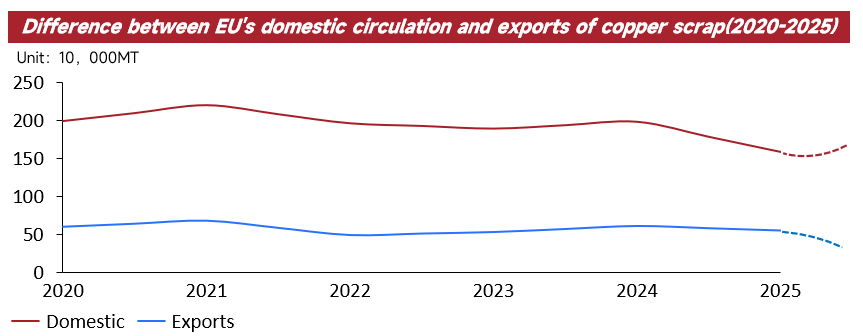
Data from 2025 indicates a significant downturn in the circulation of copper scrap within the European Union, with the decline in internal trade far outstripping the drop in exports to external markets. This suggests that despite policy efforts to retain resources within the bloc, the market’s reality is a rapid erosion of internal consumption capacity. This structural divergence demonstrates that the outflow of copper scrap is driven not only by external demand but also by the stagnation of Europe’s own industrial needs.

Causes of Stagnated Internal Demand: Manufacturing Slump and High Costs
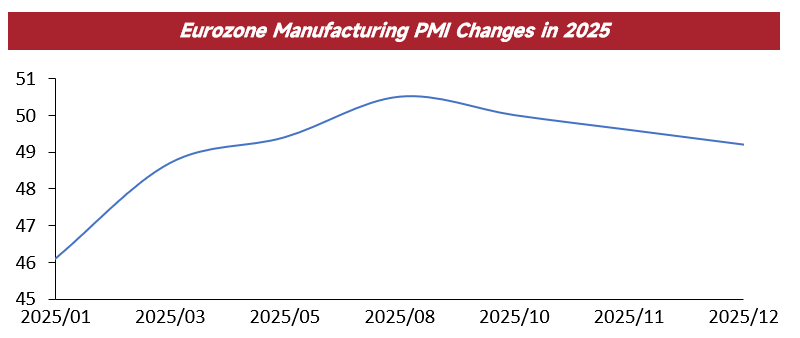
The "cliff-like" drop in EU internal copper scrap trade is primarily driven by a collapse in consumption. Led by Germany, Europe’s industrial powerhouses are seeing sustained weakness in copper-intensive sectors such as automotive, construction, and electrical equipment. As orders plummet, factories have slashed raw material procurement to a minimum.

Simultaneously, high energy prices have saddled European smelters with cost structures significantly higher than those of their Asian counterparts. To remain operational, these smelters are forced to lower their purchase prices for copper scrap. Consequently, scrap flows toward overseas markets that offer higher bids and faster capital turnover.

The "Front-Running" Effect of Policy Tightening

Market behavior is being further distorted by the anticipation of looming regulations. Starting in July 2025, the EU launched systematic customs monitoring of cross-border metal scrap movements. Stricter regulatory frameworks will take effect in May 2026, culminating in a total export ban to non-OECD countries by May 2027. This clear regulatory roadmap has triggered a "front-running" effect. To bypass future compliance costs, complex auditing processes, and the eventual ban, traders are accelerating liquidations during the current window of opportunity.

The European Recycling Industries’ Confederation (EuRIC) has voiced urgent concerns, stating that the European Commission must extend the deadlines related to the new Waste Shipment Regulation (WSR) to prevent a collapse of the regional scrap market. Under the WSR, non-OECD countries must submit applications to the EU by February 21, 2025, to continue importing materials classified as waste."If applications are not submitted by the deadline, the EU will implement a total export ban on recycled materials to nearly 150 countries starting May 21, 2027," EuRIC warned. The federation noted that while it is pushing for compliance, most non-OECD countries are ill-prepared for the EU’s "cumbersome application procedures," which involve massive datasets and complex questionnaires that place an immense burden on foreign administrations. Furthermore, EU outreach has been insufficient, leaving these nations largely unaware of the economic impact the WSR will have on global trade and the supply of recycled materials. EuRIC argues that if the export market collapses, the EU’s own recycling industry will shrink, leading to recyclable waste being landfilled and undermining public trust in waste sorting.

Attempting to retain resources solely through restrictive export policies addresses the symptoms rather than the root cause. Resource retention is only viable if there is sufficient domestic capacity to process and consume them. Without a recovery in European manufacturing competitiveness, copper scrap forcibly kept within the bloc via tariffs or bans will merely turn into unmarketable inventory rather than economic value. Furthermore, administrative intervention risks decoupling European internal prices from the global market, artificially suppressing local purchase prices. This will directly discourage investment in the recycling industry and undermine the circular economy.

Final takeaway

The outflow of copper scrap is a consequence of Europe’s deindustrialization, not its cause. Relying on administrative force to redirect resource flows will only amplify internal structural contradictions. The solution lies not in sealing borders, but in restoring the competitiveness of European manufacturing. Only when European industry is competitive again will copper scrap remain within the region through the natural logic of the market.


Data Source Statement: Except for publicly available information, all other data are processed by SMM based on publicly available information, market communication, and relying on SMM‘s internal database model. They are for reference only and do not constitute decision-making recommendations.

For any inquiries or to learn more information, please contact: lemonzhao@smm.cn
For more information on how to access our research reports, please contact:service.en@smm.cn
Related News
"Premier Li Qiang Leads State Council Meeting on Enhancing Effective Investment, Boosting Economic Growth"
10 hours ago
"Premier Li Qiang Leads State Council Meeting on Enhancing Effective Investment, Boosting Economic Growth"
Read More
"Premier Li Qiang Leads State Council Meeting on Enhancing Effective Investment, Boosting Economic Growth"
Premier Li Qiang presided over an executive meeting of the State Council to study policy measures for promoting effective investment. The meeting noted that promoting effective investment plays an important role in stabilizing economic growth and strengthening momentum for development. It is necessary to innovate and improve policy measures, and intensify efforts to enhance the efficiency of utilizing funds such as central budget investments, ultra-long-term special treasury bonds, local government special bonds, and new-type policy-based financial instruments. In conjunction with formulating and implementing the 15th Five-Year Plan
10 hours ago
"Guided by Xi Jinping Thought, Implement 20th CPC Congress Spirit, Apply New Development Philosophy...
10 hours ago
"Guided by Xi Jinping Thought, Implement 20th CPC Congress Spirit, Apply New Development Philosophy...
Read More
"Guided by Xi Jinping Thought, Implement 20th CPC Congress Spirit, Apply New Development Philosophy...
Guided by Xi Jinping Thought on Socialism with Chinese Characteristics for a New Era, we will thoroughly implement the spirit of the 20th National Congress of the Communist Party of China and the plenary sessions of the Party’s 20th Central Committee, fully and faithfully apply the new development philosophy, strengthen top-level design, build computing power interconnection nodes oriented toward national hub periods, major strategic regions, and key industries, establish a system of computing power interconnection nodes, improve the efficiency and service level of public computing power resources, and promote high-quality development of computing power.
10 hours ago
Indirect Iran-US Nuclear Talks in Muscat Show Progress, Omani FM Mediates Tense but Efficient Discussions
11 hours ago
Indirect Iran-US Nuclear Talks in Muscat Show Progress, Omani FM Mediates Tense but Efficient Discussions
Read More
Indirect Iran-US Nuclear Talks in Muscat Show Progress, Omani FM Mediates Tense but Efficient Discussions
After intensive indirect consultations, the new round of nuclear talks between Iran and the US in Muscat, the capital of Oman, has achieved phased progress. It is reported that during this round of talks, the Iranian and US delegations did not meet directly. Instead, Omani Foreign Minister Badr acted as an intermediary, conveying a series of core proposals, strategic concerns, and policy positions to the other side. The atmosphere at the talks was tense yet efficient. According to preliminary on-site assessments, although both sides continue to negotiate over specific terms, they have reached a consensus on the key objective of "continuing dialogue."
11 hours ago
[SMM Analysis] The Paradox Behind the Stagnation of EU Internal Copper Scrap Trade and the Surge in Outflows - Shanghai Metals Market (SMM)